Introduction
Started a budget with great intentions on the 1st, and by the 15th you’re back to random spending with no tracking at all? This happens to nearly everyone, and it’s usually not a willpower problem — it’s a design problem. Learning how to create a monthly budget that genuinely survives beyond week two requires a slightly different approach than the rigid spreadsheets most people start with.
Why Most Budgets Fail
In short: Learning how to create a monthly budget that actually works means building in flexibility for irregular expenses and starting with your real spending patterns, not an idealized version — rigid budgets with zero flexibility are the main reason most people abandon them within a few weeks.
Most people set unrealistic category limits based on how they wish they spent, not how they actually do.
Step 1: Track Before You Budget
Before setting any limits, track your actual spending for at least 2-3 weeks. This gives you real numbers instead of guesses.
I’ve noticed people consistently underestimate food delivery and overestimate how much they save “automatically” — actual data corrects both these blind spots quickly.
[link to related guide on 50 30 20 budget rule here]
Step 2: Categorize Realistically
- Fixed expenses: Rent, EMIs, insurance premiums, subscriptions — these don’t change month to month
- Variable necessities: Groceries, utilities, fuel — these fluctuate but are essential
- Discretionary spending: Entertainment, dining out, shopping — the flexible category where most overspending happens
- Irregular expenses: Annual insurance renewal, festival gifts, occasional repairs — often forgotten entirely in monthly budgets
Step 3: Set a Buffer for Irregular Expenses
This is the step most budgets skip, and it’s exactly why they collapse when an unexpected expense shows up. Set aside 5-10% of your income specifically for irregular, non-monthly expenses.
A Practical Example
Divide your annual irregular expenses (festival spending, annual subscriptions, occasional car servicing) by 12, and set that amount aside monthly in a separate sub-account or envelope.
Step 4: Choose a Budgeting Method That Fits Your Personality
- Zero-based budgeting — every rupee assigned a job, good for detail-oriented planners
- 50/30/20 rule — simpler, percentage-based, good for beginners
- Envelope method — physical or digital “envelopes” per category, good for those who overspend easily on cards
- Pay-yourself-first — automate savings first, budget the rest freely
Pick based on how much detail you’re actually willing to maintain long-term — an overly complex system you abandon after a month is worse than a simple one you stick with for years.
[link to related guide on best budgeting apps here]
Step 5: Automate What You Can
Set up auto-transfers for savings and SIPs right after salary credit, before you have a chance to spend it elsewhere. This single change eliminates a huge amount of budgeting friction.
Step 6: Review Weekly, Not Just Monthly
A quick 5-minute weekly check-in catches overspending before it snowballs into a full-blown budget failure by month-end. Waiting until the 30th to review is often too late to course-correct.
Has a small overspend in week one ever spiraled into complete budget abandonment by week three? Weekly check-ins prevent exactly this pattern.
A Real-World Scenario
Picture a young couple in Jaipur who’d tried budgeting apps three separate times and given up each time within a month. What finally worked was ditching the rigid category limits and instead setting just three buckets — fixed, flexible, and savings — with a small buffer for surprises. Less precise, sure, but it actually stuck, which matters more than theoretical perfection.
[link to related guide on personal finance for beginners here]
Adjusting Your Budget Over Time
Your first monthly budget won’t be perfect, and that’s completely fine. Revisit and adjust category limits every month or two based on what’s realistic, not what looks good on paper.
FAQs
How long does it take for a monthly budget to actually feel natural? Most people need 2-3 months of consistent tracking before a budget starts feeling automatic rather than effortful.
Should I budget down to the last rupee or leave some flexibility? Leaving 5-10% flexibility for miscellaneous spending generally makes budgets more sustainable long-term compared to overly rigid plans.
What’s the biggest mistake people make when creating a monthly budget? Setting unrealistic limits based on aspiration rather than actual historical spending, which leads to quick frustration and abandonment.
Is a budgeting app better than a manual spreadsheet? Either works — the best method is whichever one you’ll actually maintain consistently over months, not years of good intentions.
How often should I revise my monthly budget? Review weekly for quick course-correction, and do a more thorough revision every 1-2 months as your circumstances change.
Conclusion
Learning how to create a monthly budget that survives past the first few weeks really comes down to building in realistic flexibility from the start, rather than an idealized plan that collapses at the first surprise expense. Track first, categorize honestly, build in a buffer, and review weekly. It won’t be perfect immediately — give yourself two or three months before judging whether it’s actually working for you.
Suggested Alt Text:
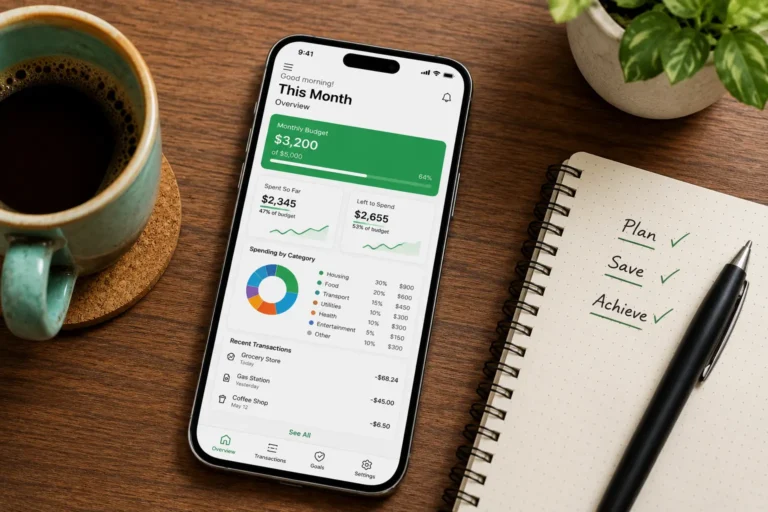
- “Monthly budget categories chart with fixed and flexible expenses”
- “Person creating a realistic monthly budget using notebook and app”