Introduction
Downloaded a budgeting app, used it enthusiastically for a week, then never opened it again? That’s a common pattern, and it usually comes down to picking an app that didn’t actually fit how you naturally track money. The best budgeting apps aren’t necessarily the ones with the most features — often it’s the simplest one you’ll genuinely keep using. Let’s compare the real options.
What Actually Matters in a Budgeting App
In short: The best budgeting apps for most users prioritize automatic bank/UPI transaction syncing, simple visual spending breakdowns, and minimal manual data entry — apps requiring heavy manual logging tend to get abandoned within a few weeks, regardless of how feature-rich they are.
The less friction involved in tracking, the more likely you are to stick with it long-term.
Top Budgeting Apps Compared
- Walnut — Strong automatic transaction categorization via SMS reading, popular among Indian users for its accuracy
- Money View — Combines budgeting with loan and credit score tracking in one app
- INDmoney — Broader financial tracking including investments, not just spending, good for a consolidated view
- ET Money — Solid budgeting features paired with mutual fund investment options within the same app
- Google Sheets (manual) — Still genuinely effective for disciplined users who prefer full control over categorization
I switched between three different apps before landing on one that actually stuck, mainly because the first two required too much manual correction of miscategorized transactions.
[link to related guide on how to create a monthly budget here]
Automatic vs Manual Tracking
Automatic (SMS/Bank Sync)
Pros: Minimal effort, captures nearly everything automatically Cons: Occasional miscategorization, requires giving the app SMS reading permissions, which some users are understandably cautious about
Manual Entry
Pros: Complete control, no privacy concerns around SMS access Cons: Requires genuine discipline; most people who choose manual entry stop logging within a few weeks
Free vs Paid Budgeting Apps
Most solid budgeting apps in India offer core features free, with premium tiers unlocking advanced analytics, multiple account tracking, or investment integration.
For a beginner, the free tier of most apps is genuinely sufficient — don’t feel pressured into a paid subscription before you’ve even confirmed you’ll stick with tracking consistently.
[link to related guide on personal finance for beginners here]
Privacy Considerations
Budgeting apps that read SMS for automatic transaction tracking need to be evaluated carefully. Stick to well-known, established apps with clear privacy policies rather than obscure ones with minimal user base or reviews.
A Reasonable Compromise
If SMS access concerns you, apps using the RBI-regulated Account Aggregator framework offer a more secure, consent-based alternative to raw SMS reading.
Features Worth Prioritizing
- Automatic categorization accuracy — test this for a week before committing long-term
- Multi-account support if you use more than one bank
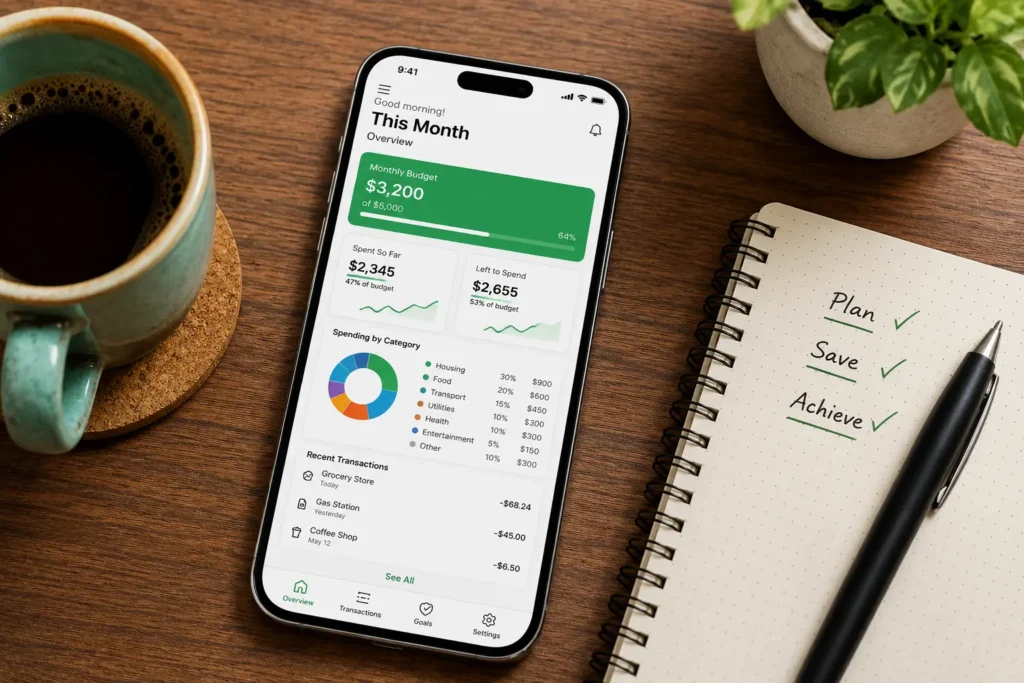
- Visual spending breakdowns — pie charts and trend graphs genuinely help spot patterns faster than raw numbers
- Goal-setting features for specific savings targets
A Real-World Scenario
Picture a freelance content writer in Jaipur with irregular monthly income, who found most budgeting apps assumed a fixed salary structure and didn’t handle her variable income well. She eventually settled on a simple Google Sheets template with monthly income averaging built in, since none of the mainstream apps handled her specific situation elegantly.
[link to related guide on 50 30 20 budget rule here]
Should You Pay for a Premium Budgeting App?
Only after you’ve confirmed, through consistent free-tier usage for at least a month or two, that budgeting is actually a habit you’re sticking with. Paying upfront for a habit you haven’t built yet often leads to an abandoned subscription.
FAQs
Are budgeting apps safe to link with my bank account? Established, well-reviewed apps using secure, regulated frameworks are generally safe; always check permissions requested and avoid lesser-known apps with poor reviews.
Which budgeting app is best for someone with irregular income? Apps or manual spreadsheets that allow custom income averaging tend to work better than those assuming a fixed monthly salary.
Do I need a paid budgeting app, or is the free version enough? For most beginners, free tiers offer sufficient functionality; premium features usually matter more for advanced users with complex financial situations.
Can budgeting apps track cash spending too? Most apps allow manual entry for cash transactions, though this requires more discipline since it can’t be automatically captured.
How accurate is automatic transaction categorization in these apps? Generally 80-90% accurate initially, improving over time as the app learns your specific spending patterns and merchant names.
Conclusion
The best budgeting apps for you personally depend far more on your income pattern and tracking preferences than on any objective “best overall” ranking. Test two or three options for a couple of weeks each before committing long-term, and prioritize whichever one requires the least manual effort to maintain consistently. The fanciest app in the world is useless if you stop opening it after the first month.
Suggested Alt Text:
- “Comparison of best budgeting apps in India 2026”
- “Smartphone showing budgeting app spending breakdown chart”