Water looks simple enough. Turn on the tap, fill a glass, and take a drink. Yet the water flowing through a home can contain a mixture of naturally occurring minerals, dissolved substances, and, in some cases, unwanted contaminants. Most of the time, you won’t know what’s present just by looking at it. Clear water isn’t necessarily free from every concern, and water that leaves spots on your dishes isn’t automatically unsafe.
Understanding water quality doesn’t require a chemistry degree. A few basic concepts can help you make better decisions about filtration, water softening, and testing. More importantly, knowing what different substances mean can stop you from spending money on a treatment system that doesn’t address your household’s actual needs.
Why Water Quality Varies From Home to Home
Water travels through a long journey before reaching your kitchen. It may pass through soil and rock, undergo treatment at a municipal facility, and travel through miles of pipes. Private well water follows a different path, drawing from underground sources that can vary with local geology and environmental conditions.
Along the way, water can dissolve minerals and pick up other substances. The composition depends on the source, the treatment process, the plumbing, and sometimes the season. That’s why two homes in the same neighborhood can experience different water quality concerns.
Some households notice a strong chlorine taste. Others struggle with mineral deposits around taps or reddish stains in sinks. These signs can point toward particular issues, but they aren’t definitive tests. If your water changes suddenly or you have a specific safety concern, proper testing is a much more reliable approach than guessing.
Understanding Hard Water and Its Minerals
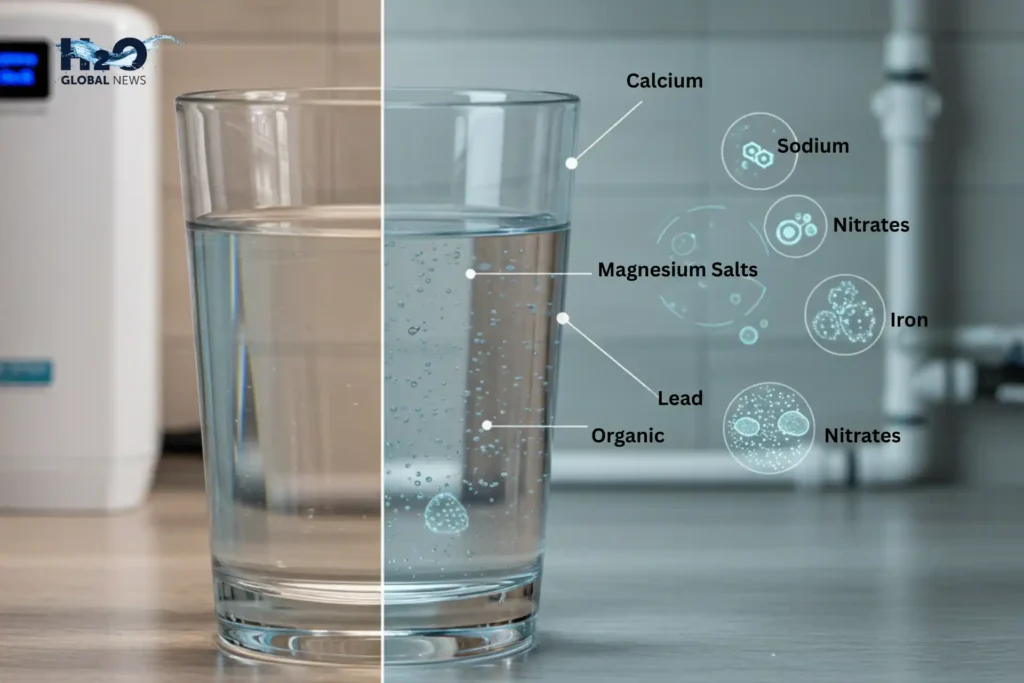
One of the most common water quality issues is hardness. It occurs when water contains elevated levels of calcium and magnesium, two naturally occurring minerals commonly found in groundwater. As water moves through limestone and other mineral-rich rocks, it can dissolve these substances and carry them into the household supply.
Hard water is usually more of a practical nuisance than an immediate health concern. It can leave white spots on glassware, create scale around showerheads, and make soap less effective. You might also notice that towels feel stiff after washing or that cleaning the bathroom seems to require more effort than it should.
Over time, mineral scale can accumulate inside pipes, kettles, dishwashers, and water-heating equipment. The amount of buildup depends on water hardness, temperature, usage, and maintenance.
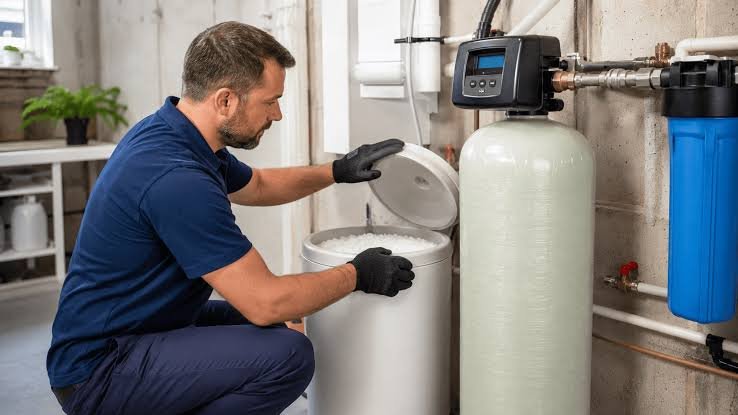
A water softener can help when hardness is the main issue. Many conventional softeners use ion exchange to replace calcium and magnesium ions with sodium or potassium ions. This reduces hardness, although it doesn’t remove every contaminant. If you’re considering a softener, check your water’s hardness first and review the system’s maintenance requirements. People who need to limit sodium for medical reasons should also discuss suitable options with a healthcare professional or water treatment specialist.
What Total Dissolved Solids Actually Tell You
Another term that often appears on water testing reports is total dissolved solids (tds). It refers to the combined concentration of dissolved substances in water, including minerals, salts, and certain other inorganic or organic materials. Results are commonly reported in milligrams per liter or parts per million.
A TDS meter can provide a quick estimate of the dissolved material in a water sample. It’s useful for some comparisons, such as monitoring changes in reverse osmosis system performance. However, the reading has an important limitation: it doesn’t identify which substances are present.
For example, a higher TDS reading may reflect naturally occurring minerals rather than a dangerous contaminant. On the other hand, a low reading doesn’t prove that water is free from every harmful substance. Some contaminants may be present at concentrations that a basic TDS meter cannot identify.
This distinction matters when choosing a filtration system. If the goal is to reduce a particular substance, you’ll need a test designed to detect it. A general TDS reading can be one piece of the picture, but it shouldn’t be treated as a complete measure of drinking-water safety.
Heavy Metals and Why Testing Matters
Some water quality concerns deserve more careful attention than mineral deposits or unpleasant taste. Heavy metals such as lead, arsenic, and certain other elements can enter water through natural geological sources, industrial activity, or, in some cases, plumbing materials. The possible source varies by location and water supply.
Lead is a particular concern in buildings with older plumbing or fittings containing lead-based components. Arsenic can occur naturally in groundwater in some regions. These substances may not change the water’s color, smell, or flavor, so appearance alone cannot establish whether they’re present.
The potential health effects depend on the substance, concentration, duration of exposure, and individual circumstances. For that reason, suspected metal contamination should be investigated with appropriate laboratory testing rather than a home taste test or a basic TDS meter.
If a test identifies a concern, choose treatment specifically certified or independently verified for the contaminant involved. Different filters have different capabilities. Activated carbon, reverse osmosis, and other technologies can reduce certain substances when the equipment is properly designed and maintained, but no single filter should be assumed to remove everything.
Choosing a Filtration System That Fits
Once you understand the issue, choosing a treatment system becomes much easier. The first question isn’t which filter has the most stages or the most impressive packaging. It’s what the system is designed to remove.
Activated carbon filters are often useful for improving chlorine taste and odor. Sediment filters capture suspended particles. Reverse osmosis systems can reduce many dissolved substances, depending on their design and certification. Water softeners, meanwhile, are primarily intended to address hardness rather than provide comprehensive purification.
Some homes benefit from a combination of treatments. A property with hard water and a separate drinking-water concern, for instance, may need a softener for the household supply and a dedicated filter at the kitchen tap. The correct arrangement depends on test results, household water use, installation space, and ongoing costs.
When comparing products, look for clear performance claims and relevant independent certifications. Check the replacement cartridge price, recommended service interval, water flow rate, and any wastewater produced by the system. A lower purchase price isn’t always the lowest long-term cost.
Don’t Ignore Maintenance
Even a well-chosen filtration system needs regular attention. Filters have a limited capacity, membranes eventually need replacement, and some systems require cleaning or sanitization. Neglecting maintenance can reduce performance and, in certain circumstances, create additional water quality problems.
Keep track of installation dates and filter changes. Follow the manufacturer’s instructions rather than waiting for an unpleasant taste or a drop in water pressure. If your water source changes or a new concern appears, consider retesting instead of assuming the existing equipment will handle it.
For private wells, regular testing is especially important because groundwater quality can change over time. Households using municipal supplies can review local water quality reports and arrange additional testing when plumbing, taste, or other concerns warrant it.
Make Decisions Based on Evidence
Water quality can seem complicated when you’re faced with unfamiliar terms and a shelf full of filtration products. But the process is manageable when you take it one step at a time: identify the concern, test the water where appropriate, and select a treatment method designed for the problem.
Minerals, dissolved solids, and potentially harmful contaminants aren’t all the same thing. Understanding the difference helps you avoid unnecessary equipment and focus on what matters for your home.
Ultimately, the best water treatment system isn’t necessarily the most expensive one. It’s the system that addresses your water quality needs, performs as promised, and receives the maintenance required to keep working properly. A little testing and research today can make your daily water routine more reassuring for years to come.