Introduction
Intraday trading looks glamorous on social media — screenshots of quick profits, confident captions, the whole show. Reality is messier, and most beginners lose money in their first few months. That said, with the right intraday trading strategies and proper risk management, it is possible to trade sensibly without treating it like gambling. Let’s get into what actually works, and what mostly doesn’t.
What Makes Intraday Trading Different
In short: Successful intraday trading strategies rely on strict entry-exit rules, tight stop losses, and closing all positions before market close — unlike investing, where holding through volatility is normal and expected.
You’re not trying to find the next multibagger here. You’re trying to capture small, quick price movements within a single trading session.
Strategy 1: Momentum Trading
This involves identifying stocks moving strongly in one direction on high volume, then riding that momentum for a short window.
- Look for stocks up 3-5% by 10 AM with strong volume
- Enter with a tight stop loss, typically 1-1.5% below entry
- Exit on the first sign of momentum slowing, don’t get greedy
I’ve noticed beginners often stay in momentum trades too long, hoping for “just a bit more” — and that’s usually where the profit evaporates.
Strategy 2: Breakout Trading
This focuses on stocks breaking above a key resistance level with strong volume confirmation.
- Identify a stock consolidating near a resistance zone for several days
- Wait for a clean breakout with above-average volume
- Enter on confirmation, not on the first tick above resistance (false breakouts are common)
- Set a stop loss just below the breakout level
[link to related guide on how to read stock charts here]
Strategy 3: VWAP-Based Trading
VWAP (Volume Weighted Average Price) shows the average price a stock traded at, weighted by volume, throughout the day. Institutional traders use it heavily.
Buying near VWAP during an uptrend and selling into strength above it is a fairly common approach among intermediate intraday traders.
Why This Works
Since large institutions often execute trades around VWAP, price tends to gravitate back toward it, creating relatively predictable entry zones.
Risk Management: The Part Nobody Wants to Talk About
Honestly, this matters more than any strategy on this list. Without it, even a good strategy fails eventually.
- Never risk more than 1-2% of your total trading capital on a single trade
- Always use a stop loss — no exceptions, ever
- Avoid revenge trading after a loss; walk away instead
- Set a daily loss limit and stick to it strictly
Has a bad trade ever made you double down out of frustration, only to lose even more? That’s the exact pattern this rule protects against.
Tools You’ll Need
- A reliable broker with low brokerage on intraday trades (Zerodha, Upstox, Angel One are common choices)
- A charting platform with real-time data
- A trading journal — genuinely underrated, and most beginners skip it
[link to related guide on best intraday trading strategies for beginners here]
A Realistic Example
Picture a beginner trader in Jaipur with ₹50,000 capital, risking just 1.5% per trade — roughly ₹750. Even with a mediocre 40% win rate, disciplined position sizing keeps them from blowing up their account on a bad streak, unlike someone risking 10-15% per trade.
Common Mistakes That Wreck Beginners
- Overtrading — taking 15-20 trades a day out of boredom or FOMO
- Ignoring the overall market trend (Nifty/Sensex direction) while trading individual stocks
- Trading with borrowed money or excessive leverage
- Not having a clear exit plan before entering the trade
FAQs
Can intraday trading strategies guarantee daily profits? No, no strategy guarantees profits — consistent risk management matters more than any single strategy’s win rate.
How much capital do I need to start intraday trading? You can technically start with ₹10,000-20,000, though having ₹50,000+ gives more flexibility for proper position sizing.
Is intraday trading riskier than long-term investing? Generally yes, due to leverage, shorter timeframes, and higher emotional pressure involved in same-day decisions.
What’s the best time of day for intraday trading? The first hour (9:15-10:30 AM) tends to have the highest volatility and volume, making it popular among intraday traders.
Do I need technical analysis knowledge for intraday trading? Yes, understanding charts, support/resistance, and volume is essential before attempting intraday strategies seriously.
Conclusion
The best intraday trading strategies aren’t about finding some secret formula — they’re about combining a simple, tested approach with genuinely strict risk management. Start small, paper trade if needed before risking real capital, and track every trade in a journal so you actually learn from your patterns instead of repeating the same mistakes. Discipline beats cleverness in this game, every single time.
Suggested Alt Text:
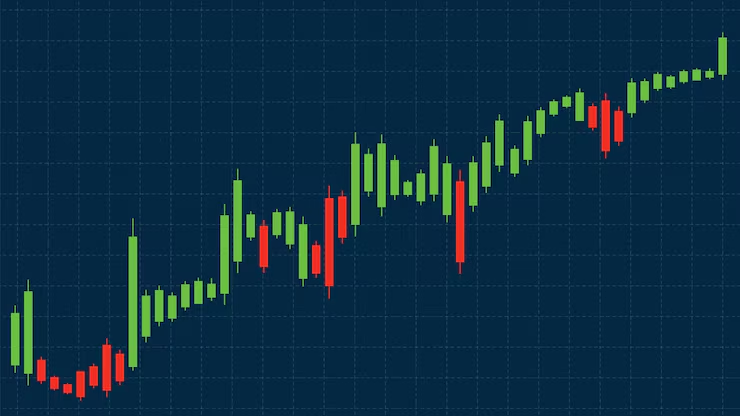
- “Trader monitoring intraday trading strategy on multiple screens”
- “Stock market breakout pattern used in intraday trading”